
top of page

It was the late Tip O'Neil who famously coined the phrase, "all politics is local.'  If ever there was a need to be reminded of this fact, it is surely in conjuncture with the latest outburst from the Senate Foreign Relations Committee. For anyone watching the news coverage of the events surrounding the latest efforts to besmirch the name of BP, a logical question to ask is, who one Earth is Senator Robert Menendez, and how did he suddenly become the Chair of such a powerful Senate Committee?

The simple answer is that he is not. Despite media claims to the contrary, Senator Menendez is NOT the Chair of the Senate Foreign Relations Committee, this honour still rests with the former Democratic candidate for president, Senator John F. Kerry of Massachusetts. Why then is the media misrepresenting Menendez's role in all of this?


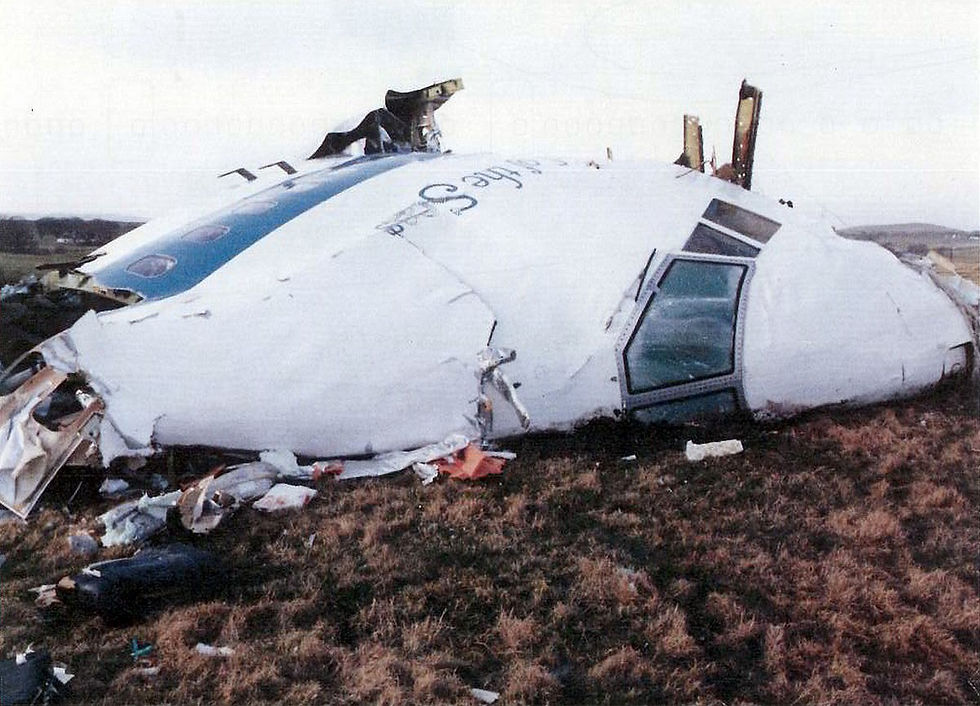
The Senate is made up of 2 elected officials from every state in the Union. Of these, some 19 serve on the Foreign Relations Committee, designed to oversee the foreign policy agencies of the federal government. Accordingly, these members provide oversight into the actions of the State Department, the CIA etc. However, not all members will take the same degree of interest in all activities. These senators may be examining foreign policy, but they remain domestic politicians, dependent upon a domestic constituency for their political lives and financial viability. Accordingly, members of the 'Foreign' Relations Committee have one eye on the globe and another on their home state. As events occur that impact their home state, they will take a special interest. And this is what has occurred in this instance. The Pan Am flight was returning to New York's JFK airport and accordingly, it is senators from the Empire State and the Garden State of Jersey who are taking the lead on this matter.


Senators serve a fixed 6 year term in office, 2 years longer than the president and as such have a great deal of power in Washington. However, even they need to face the electorate and can only do so armed with their achievements (or otherwise) of their time in office.  Which is to say that Senator Menendez has to bring home the bacon, to become a name on the Hill and in the country at large in order to deliver for New Jersey.  This can be a very unforgiving state, as Jon Corzine recently discovered. One way to achieve these results is to jump on a bandwagon, and it would appear that this is just what the good senator from the Garden State has done.


By seemingly convincing the world's media that he is Chair of the Senate Foreign Relations Committee, he has gained sudden global exposure by attempting to question Scottish and English lawmakers in relation to the release of Abdelbaset Ali al-Megrahi, the one individual convicted of blowing Pan Am flight 103 out of the sky in December 1988. By linking this decision to the plight of BP, the senator is on to a winner domestically, as few would be willing to defend the actions of the multi-national giant in the face of evidence that it helped lobby to release this terrorist in exchange for drilling rights. Menendez's day in the sun was done initially by inviting former PM Tony Blair to testify, a decision that was VERY hastily withdrawn. The attention of the world's media having been attained, Menendez extended his kind invitation to a series of lower level politicians, all of whom politely declined.


As I stated on the BBC and Sky News, the Senate Foreign Relations Committee is very influential. Domestically. But it has no international jurisdiction whatsoever. No one is under any obligation to play ball with this inquiry and efforts to suggest otherwise are quite wrong. Not that it makes anyone look good. It is possible that reputations will be reduced as a result of all this. Quite what Americans must be thinking of their former hero, Tony Blair, when they see him grinning from ear to ear with Colonel Gaddafi, as BP sign their oil deal, is anyone's guess. He is rapidly becoming all too reminiscent of the characature of himself in Robert Harris' novel The Ghost: A politician out of power, out of luck and out of friends.


It is not often (nor indeed ever) that I find myself in complete agreement with Alex Salmond, First Minister of Scotland, but his comments on Newsnight were on the button last night. If members of the Senate Foreign Relations Committee wish to come over for meetings to discuss the situation, great. But do not for one minute be under the illusion that lawmakers from Scotland or England are under any obligation to appear before their body in an official capacity. American claims of 'stonewalling' are amazing to hear when one considers that numerous hearings that have been held (and are still ongoing) into events that the US initiated but to which their officials have steadfastly refused to attend.


Senator Menendez has sought the spotlight to highlight to his constituents (many of whom lost loved ones on the Pan Am disaster) that he is doing all he can on their behalf. This is admirable enough, but it must be recognised for what it is: Domestic politics. Last night he raised the spectre of former security service personal being involved in oil deals and negotiations. I suspect that the whole area of secret deals involving oil, he security services etc will be an area that he will be wise to avoid. Like the international arms trade, there are some things that go one that no one wants examined, as a citizen of New Jersey, the good Senator will doubtless understand this.


The grandstanding also helps conceal the Senator's role in helping to plan for the upcoming elections, that Democrats are expected to do poorly in. With little else to campaign on, his record is not looking so hot. By tilting at international bad guys, he can elevate himself to a whole new playing field. Who he climbs over in his efforts to secure his domestic reputation, will be another matter.


With the new British government now having issued its much vaunted Emergency Budget, eyes will no doubt start to turn towards the Prime Minister's imminent visit to Washington to meet President Obama. The first visit by the PM to the White House is always an important event and this will prove to be no exception.


The meeting comes at a delicate time for UK/US relations. With troops serving together in Afghanistan the room for disagreement is slender, yet focus will no doubt be concentrated upon any potential rift caused by the BP oil disaster. The media will no doubt be looking for any sign of division caused by the events in the Gulf of Mexico, the may even go so far as to stress division where none exists. What they will miss, no doubt, is the change in fortune that the Conservatives are experiencing in Washington and the implications that this may have for the Special Relationship.


It is standard diplomatic practice for the American president to grant an audience to the Leader of the Opposition. Even Ronald Reagan extended this courtesy to Neil Kinnock despite his obvious (and stated) support for Prime Minister Thatcher. Recent events have been somewhat more problematic, however. William Hague met George W. Bush in Crawford, Texas, prior to the election of 2000, but one wonders if the Texan governor thought that perhaps he was due to see former Secretary of State Al Hague? In the years that followed the debacle of 2000 the leaders of Her Majesties' loyal opposition were effectively given the cold shoulder in DC, so close was Bush to Blair. Michael Howard was considered persona non grata in Washington following his calls for Blair's resignation and Ian Duncan Smith failed to make an impression in his 2002 visit.


Of course it is also true that the Conservatives have sought to gain access whilst still maintaining a low profile. David Cameron met Bush at the White House in a meeting in 2007, but images are hard to come by. Clearly there was a desire to be received in official Washington, but less of a desire to distribute images of Cameron with an unpopular president. Cameron's visit in 2007 followed a 5 year absence from Washington for a leader of the Conservative Party, the longest since the advent of the jet engine.


When Prime Minster David Cameron returns to DC he will do so in a very different capacity and with a very different occupant of the White House. Barack Obama was the first foreign leader to congratulate Cameron upon becoming PM and the Foreign Secretary's first overseas foray was to Washington and a meeting with Hillary Clinton.  This meeting was important as it presented the opportunity to reset official relations between London and Washington that has been waning for several years.

When Gorden Brown became PM he was eager not to become tainted by his relationship with George W. Bush, whose time in the White House was drawing to a close. Accordingly, Brown set a very different tone for the Special Relationship than had Tony Blair. However, it would appear that President Obama adopted a similar stance to Gordon Brown, not wishing to be seen as being to close to an unpopular British PM who was rightly expected to lose office at the earliest possible occasion.


With the departure of Brown and Bush and the emergence of Obama and Cameron, therefore, the slate has effectively been wiped clean, allowing for a new era in Transatlantic ties. Having met previously on Senator Obama's trip to London in 2008, the PM will be eager to forge a new working relationship that is businesslike and balanced, avoiding the pitfalls that Blair fell into time and again for pandering to the White House with little or no derived benefit.


The Special Relationship is about far more than the chemistry between the two leaders, but when so much attention is focused upon their dealings, it has a disproportionate impact upon all other elements; politically, culturally and militarily. With this trip, the PM will be well placed to begin a new and positive era in US-UK relations and to put to rest overblown tales of Obama rejecting a bust of Churchill (which had only been lent to the Bush White House as W. was a known admirer) and of DVD gift sets. The past can be overcome. How the BP situation is dealt with, may well be another question...

  • Dr. James D. Boys

Several weeks on and the BP situation is going from bad to worse. What started out as an environmental disaster is heading for something far worse. At risk now is the future of an organisation employing thousands of people around the world (including the United States) the pension funds of untold individuals whose portfolio managers have invested in the blue chip company, the immediate future of the Special Relationship and an American presidency. Of these, the latter is worth pondering in some detail.


Some eighteen months ago, Barack Obama came to power in a barrage of good will and even better press. Gone it appeared, were the dark days of W and knee-jerk reactions to events and people. Here, it was believed, was an intelligent and thoughtful individual who would articulate wisely the thoughts and beliefs of a nation to a wider world in such a way as to reinvigorate the United States on the world stage. Yet in this escapade, one finds the new boss, much like the old boss. With attacks coming from all sides, Obama appears to be asking only one salient question, "What would W do?"


His answer, alas, appears to be to find an easily identified foreign enemy and blast away in an effort to divert attention from American failings. In this he has been aided by a flawed response from BP that has done little if anything to help the situation. Content to put short-term domestic political considerations ahead of long-term international relationships, Obama is falling into a well laid trap that has now seen him equate the incident in the Gulf to 9/11.


All of which will be red meat to the Republicans, who can now say either that Obama is exploiting both tragedies to aid his political ends, or that in so doing, Obama reveals an ignorance of the impact that 9/11 had on the American people. And in both claims they would be absolutely correct. Keep an eye on this and see how it plays out. My guess is that you are going to be hearing this quote over and over again in attack ads in the fall. It is a major mis-calculation by the president and it could well be his undoing in the fall elections.


Obama's willingness to say and do anything to divert attention away from any debate to do with oversight of the oil business, any discussion concerning the ownership of the platform and the casual ease with which he suggests that private individuals should be fired, is woeful behaviour that would be slammed if it were muttered by any Republican president. It would appear that Obama is still benefiting from a media-love-in that carried this untried, unqualified Senator to  the White House.


The effort to prove that this is not Obama's Katrina is backfiring in ways that could never have been imagined. During Katrina, it simply appeared that Bush couldn't care less about certain elements within American society and that the federal government was inept when it came to dealing with a natural disaster. Now, it appears that Obama couldn't care less about relations with America's oldest ally, and that the federal government continues to be inept at regulating the oil industry or at responding to environmental disasters. As each day passes, Obama is looking less and less like the great hope, and more and more like a previous Democratic president who came to know the impact that an oil crisis could have on a presidency and paid a heavy price: Jimmy Carter. Unless he is able to find the voice and the direction that propelled him to victory in 2008, Obama risks repeating Carter's abbreviated occupation of the Oval Office.

Follow Us
  • Facebook Basic Square
  • Twitter Basic Square
  • Google+ Basic Square
  • Facebook
  • X
  • LinkedIn
  • email

Copyright © 2025 - Dr James D. Boys

bottom of page