
top of page

The shooting of Congresswoman Gabrielle Giffords this weekend has come as a terrible shock to the state of Arizona, to the United States and to the wider world. However, as I mentioned on Sky News this morning, perhaps the most dramatic element to this tragic event is the targeting of a young and relatively obscure female member of the lower house of congress. In the past, assassination attempts have focused on high-profile men, usually presidents or at least presidential candidates.


Barack Obama came to prominence claiming that there was no such think as red states or blue states, only the United States. Two years into his presidency, however, the U.S. is a deeply divided nation, and the divisions are only getting deeper and more pronounced. No longer is heartfelt political dialogue possible in some sections of society, as groups unite to wage political war on one another. Much has been made of the use of ‘targets’ on web sites to focus on certain districts for victory. This was not unique, not is the use of harsh rhetoric in politics. What is concerning, however, is the depth of disdain that has emerged. No longer can one merely disagree. Instead, opponents are savaged, tarred and feathered as being anti-American, and accused of dark plots, designed to radically alter the direction of the country and set it on the path to socialism.


In 2010 I was a visiting fellow at the University of North Dakota’s Centre for Human Rights and Genocide Studies. In October I received the keys to Grad Forks, the university’s hometown, having given a speech entitled The Perpetual War on Terrorism, in which I warned against the rise in political violence in the United States. What follows is an excerpt from that address:

 _____

For the vast majority of its existence, the United States has benefited from its strategic geo-political position. With abundant natural resources, expansive land mass and weak neighbours to its north and south, the United States was able to thrive in relative and fluctuating isolation from the rest of the world. As the rest of the world suffered at the hands of one extremist group after another, the United States took great pride in having avoided any such attacks and the attending fear that such atrocities can strike into the heart of the populace. Indeed this was a primary boast of the Federal Bureau of Investigation and its long-time director, J. Edgar Hoover, who saw the lack of domestic political violence as a vindication of his methods and of his agency.


Just as the United States remained apparently unscathed, the European continent in particular was inundated with sporadic acts of extreme political violence. From the IRA in the UK, to the Baader-Meinhoff Gang and the Red Army Faction in Germany, from the Basque ETA group in Spain to the actions of Carlos the Jackal, few, if any, European nations were spared the horrors of terrorism in the Twentieth Century. Indeed political violence in the form of the 1914 assassination of Archduke Ferdinand of Austria triggered the First World War, an event that formed part of a seven-year cycle in which anarchists assassinated President Carnot of France, Empress Elizabeth of Austria, the prime minister of Spain and King Humbert of Italy. As the century progressed so the body count grew: The IRA attempted to assassinate two British Prime Ministers; Margaret Thatcher and John Major and succeeded in killing Lord Mountbatten and MPs Airey Neave and Ian Gow. In Italy, Premier Aldo Moro was kidnapped and shot to death in 1978 and an assassination attempt was made on the life of Pope John Paul II, as the nation came under the grip of ‘Red Brigade’ factions. Political violence also led to the assassination of Swedish Prime Minister Olof Palme and foreign minister Anna Lindh. Elsewhere, assassins claimed the lives of Israeli Prime Minster Yitzak Rabin, Rajiv and Indira Ghandi in India and Benazir Bhutto in Pakistan.


Anarchism aside, much of this could be explained in terms of religious or political struggles that predated the modern era. Time and again leaders were struck down by groups dedicated to the promotion of an ideology or religion that they felt were threatened by the political status quo. Indeed, what differentiated the events in Europe and the rest of the world from the United States was the manner in which such events were implemented. Political violence on the European continent was uniformly seen as the act of groups, conspiring to overthrow leaders in an attempt to implement a specific philosophy, even if that was mere anarchy, with motivations ranging from the religious to the ideological and covering both extremes of the political spectrum.


Yet the United States could not escape acts of political violence, irrespective of claims made by Director Hoover, for the history of the United States is littered with such acts. Indeed, the aforementioned anarchist movement claimed the life of President William McKinley in the first year of the Twentieth Century. This led President Theodore Roosevelt to commence the first international effort to eliminate terrorism, stating, “anarchy is a crime against the whole human race, and all mankind should band together against the Anarchist. His crimes should be made a crime against the law of nations…declared by treaties among all civilized powers.” TR’s motivations, of course, were a little cloudy, as he had ascended to the presidency as a direct result of the political violence that had claimed the life of President McKinley.


In the United States, however, political violence has almost always been explained as the deranged and misguided acts of lone madmen. From the assassinations of the Kennedy brothers, Martin Luther King or many other political leaders, such acts are rarely explained as being the result of conspiracies, but rather of disturbed, lonely young men, eager to make their mark on history, even if it is the last thing that they ever do. Little wonder, therefore, that few in Europe accept the official verdicts of such events, when they stand in stark contrast to the European experience. There are exceptions of course; the Klan and the Weather Underground amongst them, but the lone individual is the norm in America, with more recent examples including Ted Kazinski, Eric Rudolph, and John Hinckley. Also, the political origins of American political violence would appear to be from the extreme right, as opposed to the European experience of terror from the Marxist/Leninist left. American fanatics, it seems are concerned about too much government as opposed to too little!


These differences raise questions pertaining to the variances in the societal and political make-up of the two continents and their governmental structures, variances that require placement in the correct historical and political context. To do so, it is instructive to consider the actions and motivations of a successive number of administrations in order to ascertain the extent to which the United States has been waging a war against political violence and the degree to which this has succeeded to date. In so doing it is possible to ascertain patterns of behaviour and rhetoric and of repeated attempts by the United States to proffer apparently simple solutions to ancient hatreds only to be surprised when such platitudes provoke a backlash that perpetuates a new cycle of violence that has dragged the United States into an apparent nightmare of its own making.

 ________

As American mourns its dead and continues its vigil for Congresswoman Giffords, it would do well to consider the lessons that have failed to be learnt from similar events in the past and how such lessons could be applied in the aftermath of this tragedy. To ignore history is to be condemned to relive it. Right now, America is continuing in a national nightmare due to its innate inability to learn the lessons of its own history. President Obama’s responsibility now is to follow President Clinton’s efforts in the aftermath of the Oklahoma City bombing, to unite the nation in grief, and in a shared vision of tomorrow.

With the midterm elections out of the way, President Obama has travelled to India and Indonesia in his latest effort to show a new face of American leadership in parts of the world that have previously lacked for such attention. Much has been made of his public diplomacy and efforts to dance in particular, but there is far more at stake here than the street credibility of Barack Obama.


Cold, hard, power politics are at the heart of the trip, with the president looking to secure up to 20 individual agreements worth $10bn for American producers, including General Electric and Boeing. At stake here is the president’s domestic standing since such deals could secure up to 54,000 American jobs, vital if the U.S. economy is going to recover in time for the re-election campaign that in many respects is already underway, but which will kick off in earnest in a little over a year’s time in the snows of New Hampshire and Iowa.


The price of generating such business in India is presidential support for a proposed Indian seat on the UN Security Council. This was not quite an announcement of active support for such an eventuality, but will regardless aggravate Pakistan at a time when the U.S. is in desperate need of their support on the AfPak boarder. Similar pronouncements were made regarding Japan and Germany in the 1990s, to no avail. This latest bout of posturing to a host nation, however, is indicative of the degree to which the American president has been reduced to a traveling salesman, promoting U.S. business interests in an effort to improve his own domestic political standing.


In addition to visiting India, Obama has continued his outreach to Muslim nations in Indonesia, his home as a child. Obama’s efforts in the face of repeated ambivalence and perceived reduced American leverage in the world carry great risks, both internationally and domestically. On the world stage, few expect a rapprochement anytime soon as the outreached hand continues to be met with an iron fist. Domestically, efforts to engage with the world’s largest Muslim nations will likely inflame tensions, with a stubborn percentage clinging to the belief that their president is a Muslim and ineligible for office as a foreigner. Such fears were played out in the mid-term elections this month, which saw Obama’s Democrats lose control of the House of Representatives.


Obama’s ability to continue his outreach to foreign lands will be curtailed by this result. Although he can now highlight Republican intransigence, he will also face investigations and hearings into policy and personnel as he prepares to seek re-election. In similar circumstances, previous presidents have sought solace abroad. Obama’s salvation however, can only come from the American electorate. Irrespective of foreign popularity, he must seek to rebuild his credentials as a president for the American people if he stands any hope of becoming a global statesman in a potential second term.


It was the late Tip O'Neil who famously coined the phrase, "all politics is local.'  If ever there was a need to be reminded of this fact, it is surely in conjuncture with the latest outburst from the Senate Foreign Relations Committee. For anyone watching the news coverage of the events surrounding the latest efforts to besmirch the name of BP, a logical question to ask is, who one Earth is Senator Robert Menendez, and how did he suddenly become the Chair of such a powerful Senate Committee?

The simple answer is that he is not. Despite media claims to the contrary, Senator Menendez is NOT the Chair of the Senate Foreign Relations Committee, this honour still rests with the former Democratic candidate for president, Senator John F. Kerry of Massachusetts. Why then is the media misrepresenting Menendez's role in all of this?


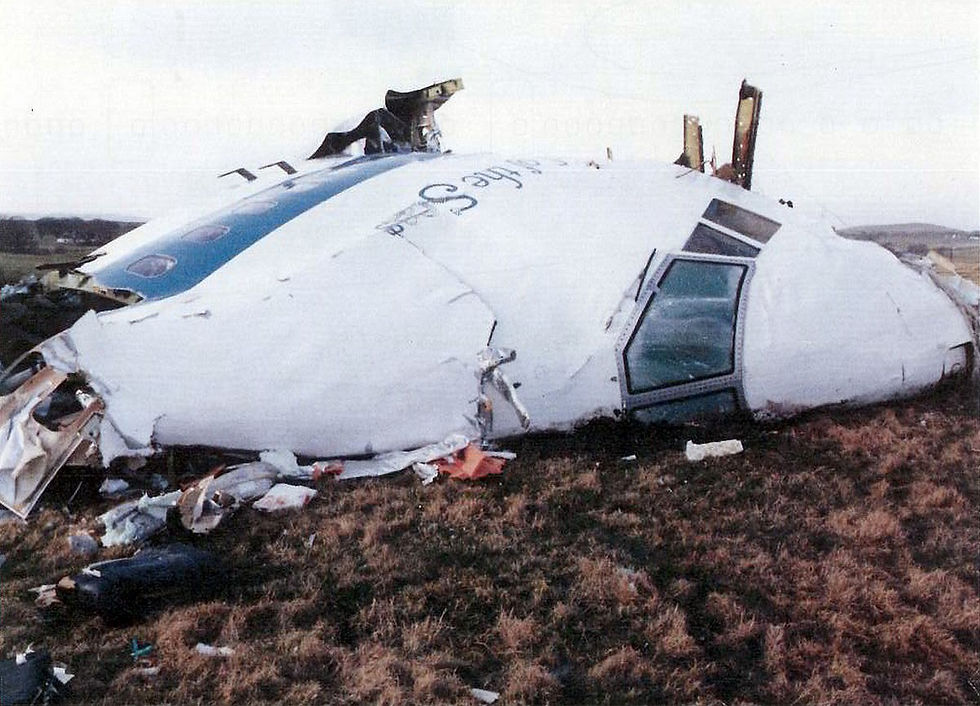
The Senate is made up of 2 elected officials from every state in the Union. Of these, some 19 serve on the Foreign Relations Committee, designed to oversee the foreign policy agencies of the federal government. Accordingly, these members provide oversight into the actions of the State Department, the CIA etc. However, not all members will take the same degree of interest in all activities. These senators may be examining foreign policy, but they remain domestic politicians, dependent upon a domestic constituency for their political lives and financial viability. Accordingly, members of the 'Foreign' Relations Committee have one eye on the globe and another on their home state. As events occur that impact their home state, they will take a special interest. And this is what has occurred in this instance. The Pan Am flight was returning to New York's JFK airport and accordingly, it is senators from the Empire State and the Garden State of Jersey who are taking the lead on this matter.


Senators serve a fixed 6 year term in office, 2 years longer than the president and as such have a great deal of power in Washington. However, even they need to face the electorate and can only do so armed with their achievements (or otherwise) of their time in office.  Which is to say that Senator Menendez has to bring home the bacon, to become a name on the Hill and in the country at large in order to deliver for New Jersey.  This can be a very unforgiving state, as Jon Corzine recently discovered. One way to achieve these results is to jump on a bandwagon, and it would appear that this is just what the good senator from the Garden State has done.


By seemingly convincing the world's media that he is Chair of the Senate Foreign Relations Committee, he has gained sudden global exposure by attempting to question Scottish and English lawmakers in relation to the release of Abdelbaset Ali al-Megrahi, the one individual convicted of blowing Pan Am flight 103 out of the sky in December 1988. By linking this decision to the plight of BP, the senator is on to a winner domestically, as few would be willing to defend the actions of the multi-national giant in the face of evidence that it helped lobby to release this terrorist in exchange for drilling rights. Menendez's day in the sun was done initially by inviting former PM Tony Blair to testify, a decision that was VERY hastily withdrawn. The attention of the world's media having been attained, Menendez extended his kind invitation to a series of lower level politicians, all of whom politely declined.


As I stated on the BBC and Sky News, the Senate Foreign Relations Committee is very influential. Domestically. But it has no international jurisdiction whatsoever. No one is under any obligation to play ball with this inquiry and efforts to suggest otherwise are quite wrong. Not that it makes anyone look good. It is possible that reputations will be reduced as a result of all this. Quite what Americans must be thinking of their former hero, Tony Blair, when they see him grinning from ear to ear with Colonel Gaddafi, as BP sign their oil deal, is anyone's guess. He is rapidly becoming all too reminiscent of the characature of himself in Robert Harris' novel The Ghost: A politician out of power, out of luck and out of friends.


It is not often (nor indeed ever) that I find myself in complete agreement with Alex Salmond, First Minister of Scotland, but his comments on Newsnight were on the button last night. If members of the Senate Foreign Relations Committee wish to come over for meetings to discuss the situation, great. But do not for one minute be under the illusion that lawmakers from Scotland or England are under any obligation to appear before their body in an official capacity. American claims of 'stonewalling' are amazing to hear when one considers that numerous hearings that have been held (and are still ongoing) into events that the US initiated but to which their officials have steadfastly refused to attend.


Senator Menendez has sought the spotlight to highlight to his constituents (many of whom lost loved ones on the Pan Am disaster) that he is doing all he can on their behalf. This is admirable enough, but it must be recognised for what it is: Domestic politics. Last night he raised the spectre of former security service personal being involved in oil deals and negotiations. I suspect that the whole area of secret deals involving oil, he security services etc will be an area that he will be wise to avoid. Like the international arms trade, there are some things that go one that no one wants examined, as a citizen of New Jersey, the good Senator will doubtless understand this.


The grandstanding also helps conceal the Senator's role in helping to plan for the upcoming elections, that Democrats are expected to do poorly in. With little else to campaign on, his record is not looking so hot. By tilting at international bad guys, he can elevate himself to a whole new playing field. Who he climbs over in his efforts to secure his domestic reputation, will be another matter.

Follow Us
  • Facebook Basic Square
  • Twitter Basic Square
  • Google+ Basic Square
  • Facebook
  • X
  • LinkedIn
  • email

Copyright © 2025 - Dr James D. Boys

bottom of page